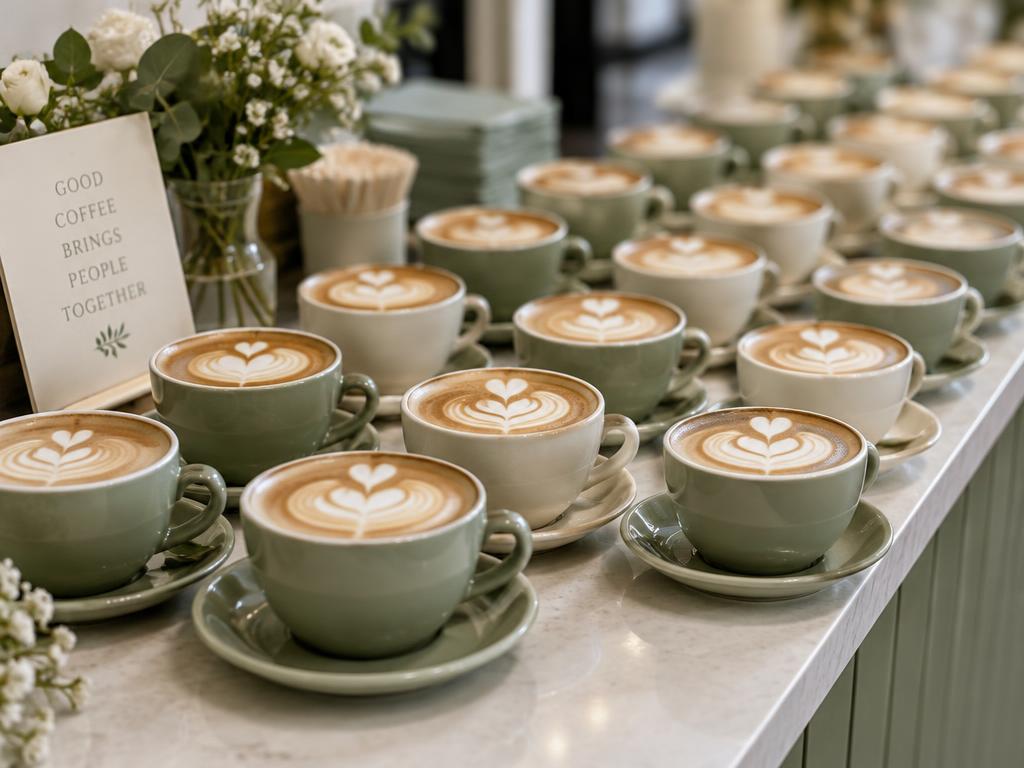
Coffee & beverage stations for seminars & workshops
Coffee breaks that keep learning sessions on schedule.
Coffee breaks that keep learning sessions on schedule. The difference between a coffee counter that works at a seminar and one that becomes a bottleneck is almost never the beans — it's sizing and timing. This page sets out both, along with menu ideas, a planning checklist and a guest-count sizing table you can plan from.
At a seminar, demand arrives in hard, scheduled spikes — a hall of people stands up at the same minute and wants coffee inside twenty minutes. The moment everything hinges on is the single scheduled tea break, which is usually only 15 minutes long. That single fact drives the whole plan: how many machines go on site, how many baristas stand behind them, whether the menu runs hot or iced, and when the counter opens and closes.
For seminars & workshops we usually combine a conference coffee station and a chai & tea station. Every setup arrives fully staffed and self-contained — machines, grinders, counters, cups, beans, milk, syrups and consumables — so the only things we need from the venue are a 2m × 2m footprint, one 16A power point per machine and water access nearby. Planner's tip: combine coffee with chai — roughly 40% of Indian attendees pick tea.
- Demand shape
- Sharp, scheduled peaks
- Typical window 8 hr day
- For 250 guests
- 3 baristas, 2 espresso machines
- Plan for ~300 cups
- Counter footprint
- 2m × 2m
- Plus one 16A power point per machine
- Book ahead
- 2–4 weeks
- Earlier in peak season
Which coffee setup fits your seminar
These are the counters we recommend most often for seminars & workshops. Most clients book two — one coffee counter and one non-coffee counter — because that is where queues actually form.
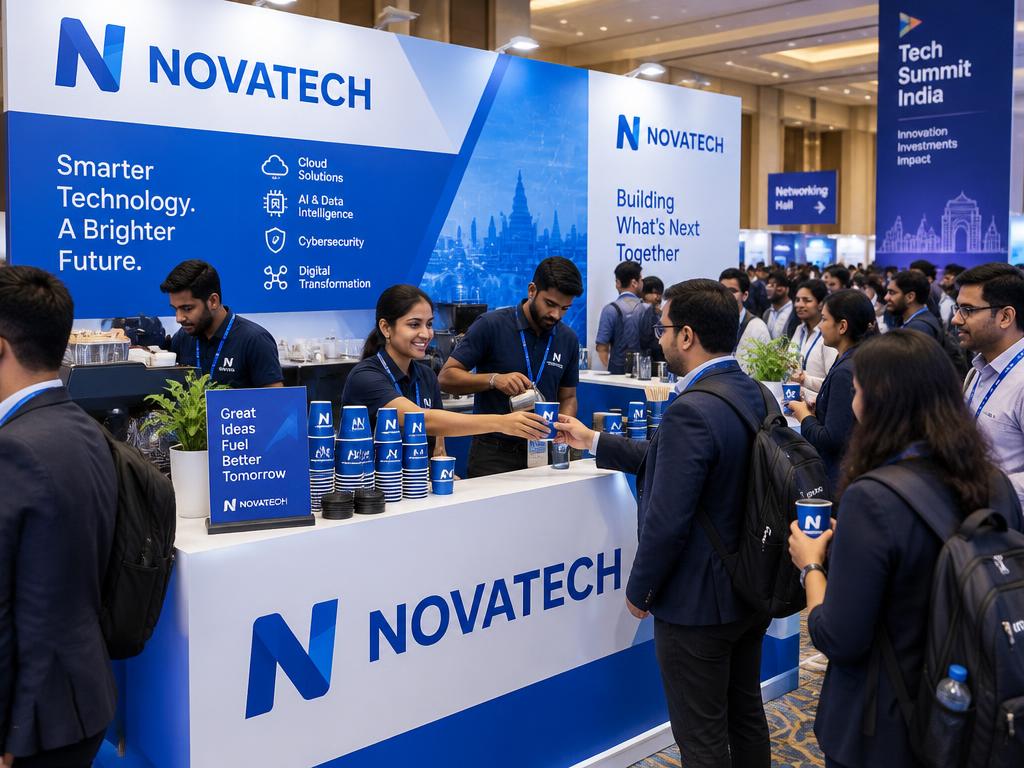
Conference Coffee Station
High-volume coffee for delegates
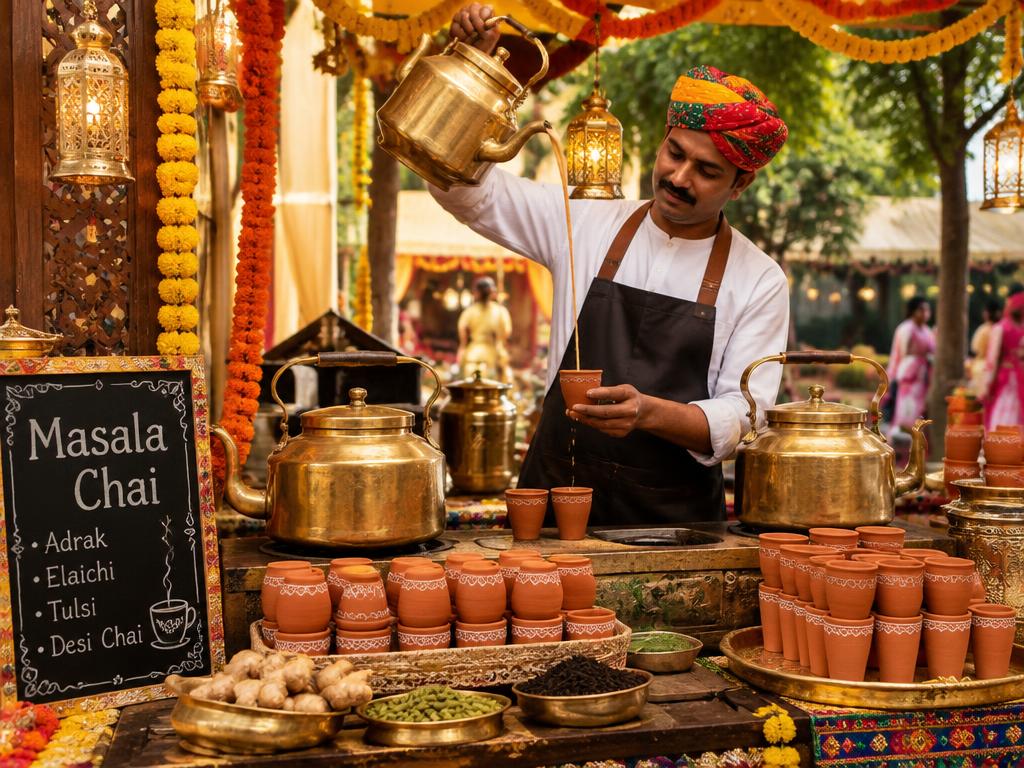
Chai & Tea Station
Live masala chai in kulhads
| Setup | From | Guests it suits | Crew | Why it works for a seminar |
|---|---|---|---|---|
| Conference Coffee Station for your seminar | from ₹150/guest | 200+ guests · built for 300–3,000 | 3–6 staff + a runner per counter | Multi-machine layout designed around a single short break, with parallel order and pour lanes. Where it earns its keep — the single scheduled tea break, which is usually only 15 minutes long. |
| Chai & Tea Station for your seminar | from ₹90/guest | 50+ guests · sweet spot 75–600 | 1–2 staff per counter | Brass kettles and kulhads, and the fastest way to serve a crowd that is standing and moving. Where it earns its keep — the single scheduled tea break, which is usually only 15 minutes long. |
Prices are indicative starting points per guest and include baristas, equipment and consumables. Crew shown is per counter at a typical guest count — see the sizing table below for 100 to 1,000+ guests. Final quotes depend on city, guest count, service hours and menu.
Run of show: the seminar beverage plan, hour by hour
This is the sequence our crews actually work to at seminars & workshops. Timings shift with your schedule, but the shape — where the quiet windows are and where the rush lands — holds almost every time.
- 1
Registration chai
09:00 – 09:45Attendees arrive, sign in and look for tea. We start with the chai kettle and one espresso lane, which is the right ratio before 10:00 in most Indian training rooms.
- 2
Mid-session break
11:15 – 11:30Fifteen minutes, one room, everyone at once. We pre-steam milk and pour to a three-drink break menu so the facilitator restarts on time instead of ten minutes late.
- 3
Lunch service
13:00 – 14:00Lower volume but longer dwell. This is a good window to take custom orders, serve the faculty table and refill the chai urns for the afternoon.
- 4
Post-lunch rescue round
14:30 – 15:30Attention drops hardest between 14:30 and 15:30. Double-shot drinks and iced coffee go out to seat level for workshops that cannot break, which keeps the room with you.
- 5
Closing tea and certificates
16:30 – 17:15Tea overtakes coffee in the final break. We hold back enough milk and kulhads for a full last round, then break down while certificates are handed out.
Menu ideas for seminars & workshops
Drawn from the counters recommended above, grouped the way guests actually order. Every drink is made fresh to order; dairy-free milk, sugar-free syrups and decaf are available across the board.
Hot coffee
Made to order on commercial machines. Carries the start and the end of most seminar timelines.
Iced & cold brew
Brewed overnight and poured over ice — what actually sells once the room warms up.
Chai, mocktails & non-coffee
Roughly four in ten Indian guests will skip coffee entirely. This column is not optional.
Signature drink ideas for seminars & workshops
A named signature drink costs nothing extra and is the thing guests photograph and remember. Ours are developed with you and printed on the menu board.
- Kashmiri kahwa for the afternoon break
- A single-origin filter batch for the faculty table
- Decaf cappuccino, labelled clearly for late-afternoon sessions
Guest count to setup sizing: 100 to 1,000+
Use this to sanity-check any quote you receive — ours or anyone else's. The staffing below is sized for seminar demand specifically, which behaves differently from a conference break or an all-day expo.
| Guests | Baristas | Espresso machines | Counters | Service window | Cups to plan for |
|---|---|---|---|---|---|
| 100 | 2 baristas | 1 espresso machine | 1 counter | 6–8 hr day | ~120 cups |
| 250 | 3 baristas | 2 espresso machines | 1 counter | 8 hr day | ~300 cups |
| 500 | 6 baristas (incl. a runner) | 3 espresso machines | 2 counters (split across zones) | 8–10 hr day | ~530 cups |
| 1,000+ | 9 baristas (incl. a runner) | 5 espresso machines | 3 counters (split across zones) | 10 hr day | ~880 cups |
How we get there: one barista on one espresso machine pours 60–80 drinks an hour, so the plan is built on 2.5 hours of actual pouring and roughly one machine per 225 guests for seminar-style demand. Staff are rostered for the peak break, not the average hour: for the other six hours of the day the same counter is quiet. Numbers are a starting point for the conversation, not a quotation — menu length, venue layout and the length of your service window all move them.
Beverage planning checklist for your seminar
A countdown you can work backwards from. Nothing here takes long — but each item is something that becomes expensive or impossible if it is left to the last week.
- 1
Lock the date, the venue and a rough headcount
6–8 weeks outTwo weeks is usually plenty. CME and certification programmes with printed agendas want three so break timings can be matched exactly. At this stage we only need three things: the date, the venue name and a headcount within about 20%. That is enough to hold equipment and a crew, and enough for us to tell you whether your seminar needs one counter or two.
- 2
Choose the setup and design the menu
3–4 weeks outPick your counters from the comparison above, then cut the menu down — six to eight drinks pour far faster than fifteen. This is also when you send logo files and brand colours for cup sleeves, counter wrap and the menu board, and when a signature drink gets named and sampled (for a seminar, something like "Kashmiri kahwa for the afternoon break").
- 3
Walk the venue: power, water and load-in
1–2 weeks outTraining rooms, hotel meeting halls and campus auditoriums. The counter usually lives in a corridor or pre-function area, so check the trolley route and lift access, and keep the machine at least a few metres from the open door so grinder noise does not carry. We also confirm the load-in window, lift or ramp access, parking, and a 2m × 2m footprint per counter. If power is genuinely unavailable, say so now — a generator feed is easy to plan and impossible to improvise.
- 4
Map the counter to your run of show
1 week outSend the final agenda or schedule. We align opening time, break timings and the quiet windows to it, and we staff the single scheduled tea break, which is usually only 15 minutes long specifically. A counter that opens 30 minutes late at the wrong moment costs more than an extra barista.
- 5
Reconfirm the final headcount with a buffer
48 hours outGive us the final delegate or employee count and we plan consumables about 10% above it — the cheapest insurance at any event. We also exchange on-site contact numbers, gate passes and vehicle details so nothing stalls at security.
- 6
Day of: soft open, taste check, cup count
Event dayOur crew arrives 90–150 minutes early, builds the counter, dials in the grinder on the venue's water and tastes shots before the first guest. At the close you get a cup count, so you know exactly what was poured and what to plan for next time.
Coffee station FAQs for seminars & workshops
The questions we are asked most often about beverage service at seminars & workshops.