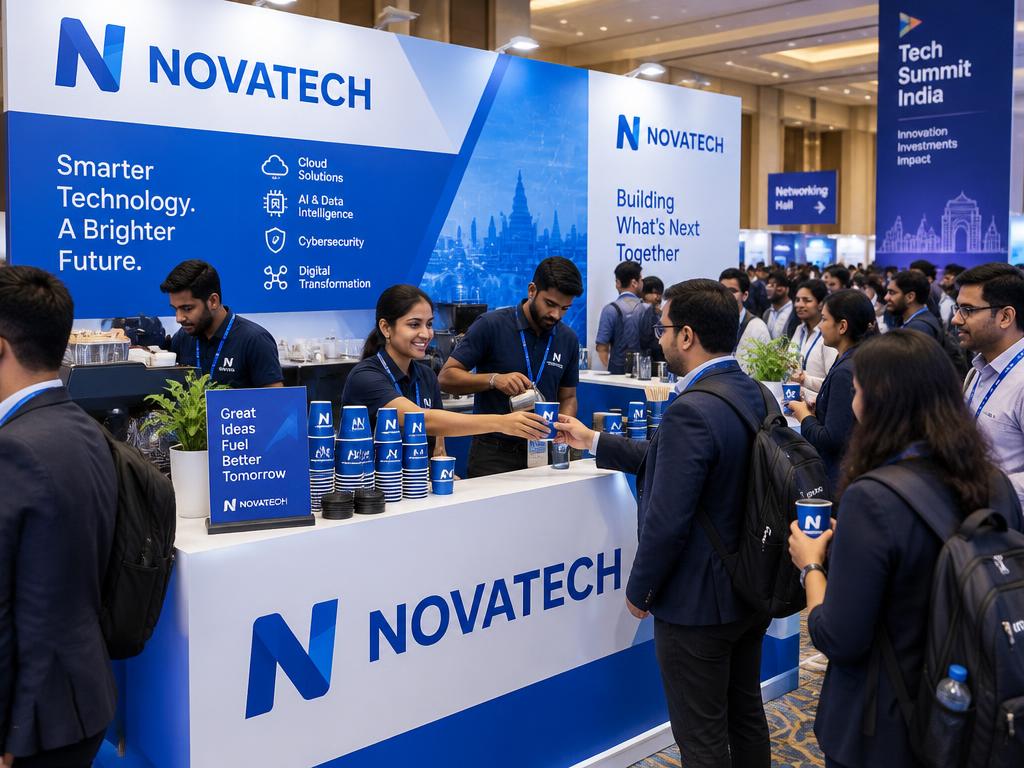
A 1,000-delegate conference needs four to five coffee islands placed at session exits, eight to twelve baristas and a separate tea queue. Machines must be at brew temperature 20 minutes before the break, and planning about 1.6 drinks per delegate across two breaks keeps every queue under five minutes.
Key takeaways: the numbers behind this post
If you only read one block on this page, read this one. Four figures answer most of what planners ask us in the first phone call about a conference coffee station for conferences; the rest of the post explains how each one moves.
- Islands for 1,000
- 4–5
- Sited at hall exits, never one long central counter
- Baristas
- 8–12
- Two to three per island, plus a named shift lead
- Queue target
- Under 5 min
- Measured at the worst minute of the mid-morning break
- Warm-up
- 20 minutes
- Machines at temperature before doors open on the break
In short: A 1,000-delegate conference needs four to five coffee islands placed at session exits, eight to twelve baristas and a separate tea queue. Machines must be at brew temperature 20 minutes before the break, and planning about 1.6 drinks per delegate across two breaks keeps every queue under five minutes.
Beverage run of show for conferences
Demand does not sit flat across an event — it moves with the programme, and the peak is almost never where hosts expect it. This is how we staff and stage a counter through conferences, hour by hour. The busiest stretch is the 20-minute mid-morning break, when the whole hall empties into the foyer at once.
| When | What happens at the counter | How we staff and stage it |
|---|---|---|
| T-60 min to 09:30 | Registration and welcome coffee | Delegates arrive across a long tail, so one counter plus a chai kettle handles it. We pre-heat machines 45 minutes before doors and pour Americanos and cappuccinos to order while badges are collected. |
| 11:00 – 11:30 | Mid-morning break — the first real peak | The hall empties in under two minutes. We split into parallel order and pour lanes, pre-steam milk in jugs and keep a tray of ready cappuccinos moving so nobody queues past the second minute. |
| 13:00 – 14:30 | Lunch, and the slump that follows | Demand dips during lunch, then spikes hard at 14:00. This is iced-coffee and double-espresso hour — we switch the menu board, chill glasses in advance and pour cold brew alongside hot drinks. |
| 16:00 – 16:30 | Afternoon tea break | Tea overtakes coffee after 16:00 at most Indian conferences. The chai counter takes roughly four in ten orders here, which also takes pressure off the espresso machines. |
| 17:30 – 18:30 | Networking close and pack-down | A single machine stays live through the closing networking hour for speakers, sponsors and the organising team, then we break down in 30–40 minutes without blocking delegate exits. |
Timings shift with your own run of show — send the agenda and we re-stage against it. Two to four weeks is comfortable; multi-hall summits and anything needing sponsor-branded counters want four to six weeks so artwork can be proofed. Our crew loads in 90 minutes before first serve and breaks down cleanly afterwards.
Layout
Split service into multiple islands near session exits. Separate tea and coffee queues — tea is faster to serve.
Timing
Have machines warmed up 20 minutes before the break and stage pre-poured milk pitchers for speed.
Send your run of show and we'll build the beverage plan
Send your date, city, venue and guest count and you will have a menu plus a costed per-guest number within two hours. Or call +91 96731 98867 and we will price it on the call.
How to plan beverage service for conferences
Five or six decisions, in the order they come up. Work down the list and nothing important gets left to the final week.
- 1
Map the programme before the menu
Step 1Send the run of show first. For conferences the counter has to be ready for the 20-minute mid-morning break, when the whole hall empties into the foyer at once — and that single window decides staffing far more than the total guest count does.
- 2
Decide when the counter opens, and when it closes
Step 2Open at arrival with one counter rather than all of them, go to full capacity at the break or straight after the meal, and keep one counter running 60–90 minutes past the formal close.
- 3
Position the counter on the guest flow
Step 3Convention centres usually have power, but the foyer points are often shared with AV. Confirm one dedicated 16A point per machine with the venue's technical team, and ask for the counter position on the delegate flow plan rather than behind a pillar.
- 4
Confirm power, water and the load-in window
48 hours beforeOne dedicated 16A socket per machine on a circuit not shared with AV, water within 20 metres, and 120 minutes before first serve. Get it in writing rather than verbally on a site walk.
- 5
Brief the crew against the agenda
On the dayMilk steamed, cups stacked and staff at the counter before the doors open on a break. Machines need 20 minutes to reach brew temperature, so the warm-up is scheduled, not improvised.
- 6
Keep one counter on the tail
After the programmeThe 60–90 minutes after the formal close are consistently busier than hosts expect, and they are the cheapest hour of service you can buy — one barista and one machine, not the full crew.
Frequently asked questions
How long should a conference coffee break be?
How many coffee stations do I need for 500 delegates?
Should tea and coffee share a queue?
What does the venue need to provide for a conference coffee station?
How long before service does the crew arrive?
When is the final headcount due?
What do you need from the venue?
How we built this run of show
We would rather show the working. Since 2016 our crews have run 5,000+ events and served 2.5M+ cups in more than 60 Indian cities, and the figures above come from those bookings rather than from a market survey.
- ●The run of show built from event timings we have actually worked, logged counter by counter
- ●Peak moments identified from when cups were served, not from when hosts expected demand
- ●Load-in and warm-up windows measured from arrival to first calibrated shot
- ●Tail service lengths taken from events where we stayed open and events where we closed too early
What a quoted rate includes
- Multiple espresso machines
- Queue-free serving layout
- Break-time scheduling
- Full sponsor-branded counter, backdrop & cups
What it excludes
- 18% GST, invoiced separately on every booking
- Travel, transport and stay for venues outside city limits, charged at cost
- Venue-supplied floor space, power points and water access
- Overtime beyond the booked service window, billed hourly
- Menu items outside the agreed list, and print production beyond the standard counter wrap
Who this post is for
- Event managers building a minute-by-minute run of show
- Hosts who know roughly what they want but not when the counter should open and close
- Production teams coordinating a beverage counter against AV, catering and a stage programme
Published 22 July 2026 · last reviewed 6 October 2026 by the Barista Station events team · +91 96731 98867