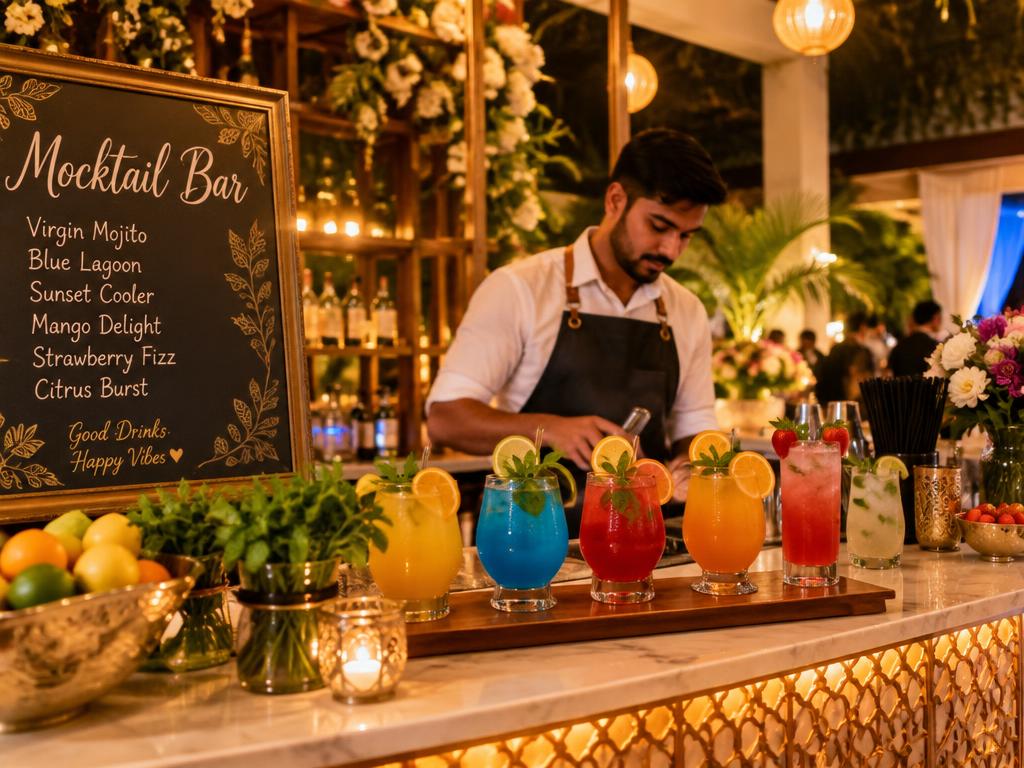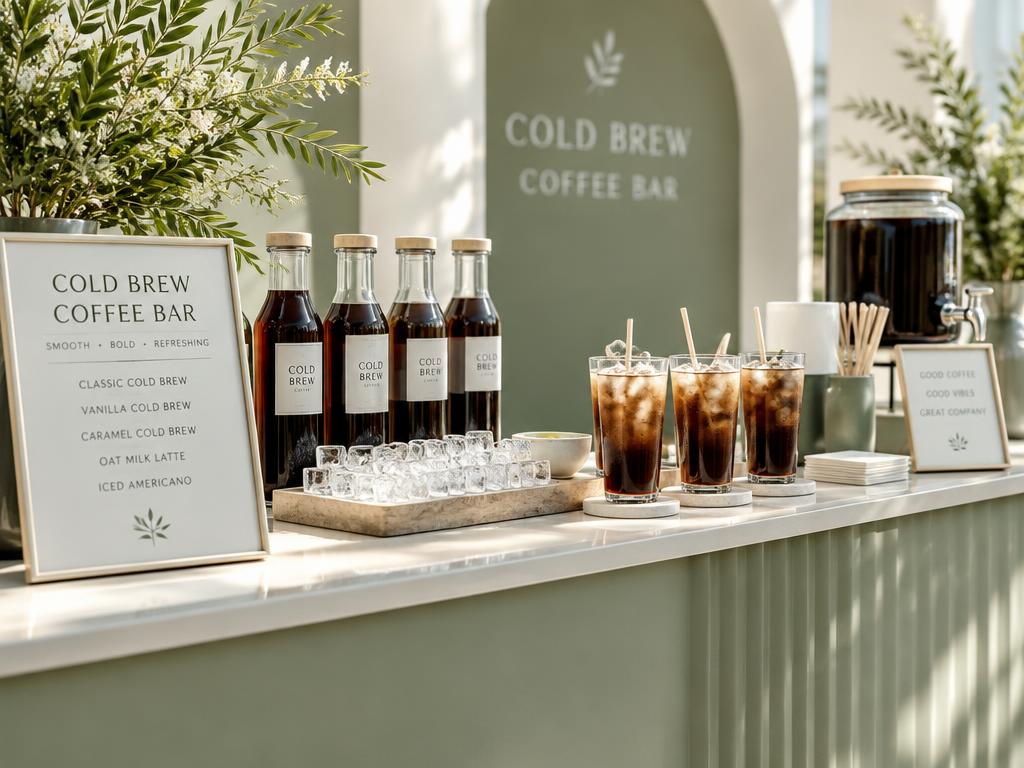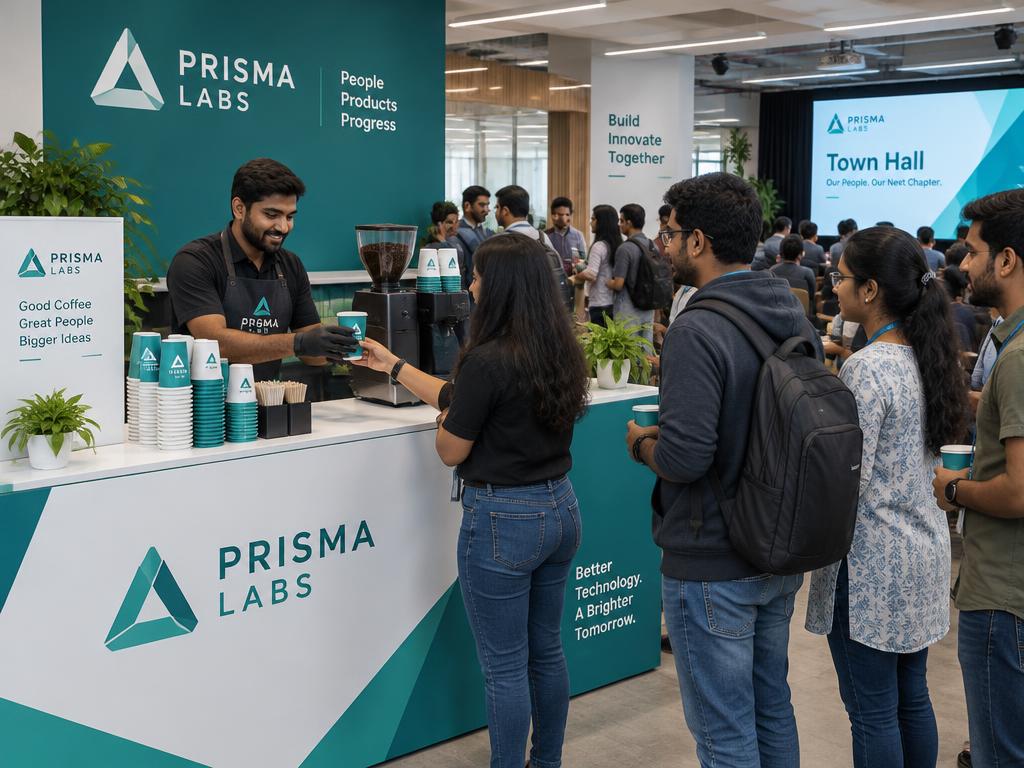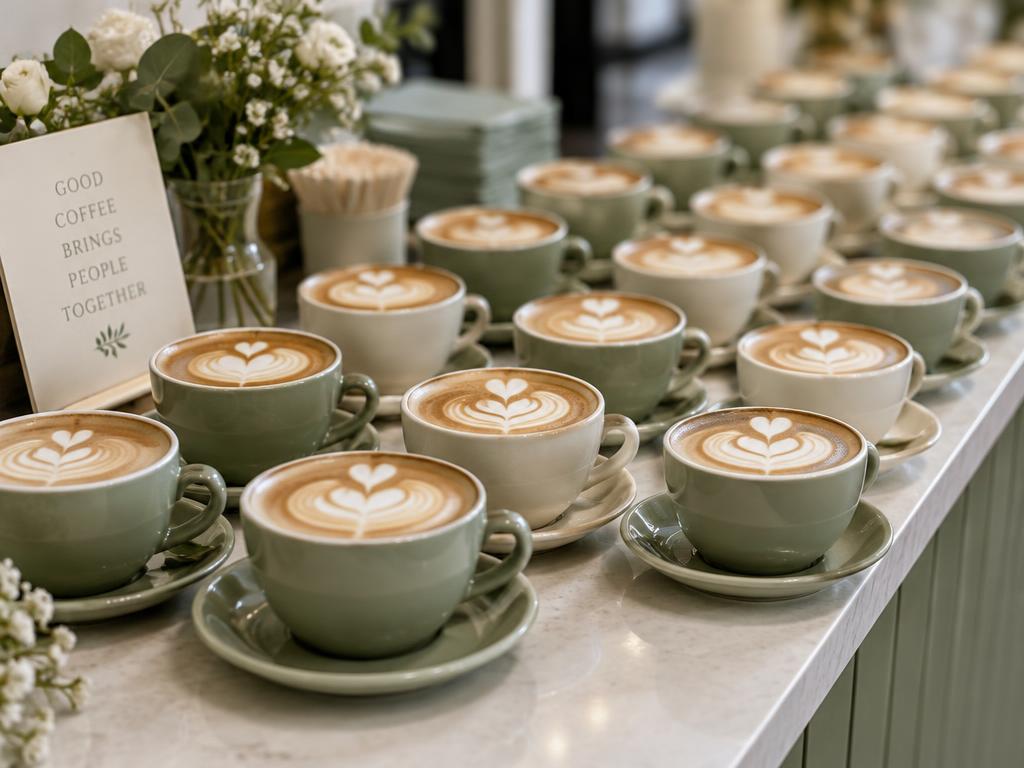
A low-waste event coffee bar uses compostable or ceramic cups, bulk plant milks instead of single-serve cartons, dosed syrups rather than sachets, and sends spent grounds to a local composting partner. Ceramic adds a washing line but removes the single biggest waste stream at a coffee counter.
Key takeaways: the numbers behind this post
Start here. Everything below is drawn from bookings we have actually run rather than from a rate card, and each number is explained further down the page.
- Cup options
- 3
- Compostable paper, ceramic, or reusable branded tumbler
- Grounds per 500 cups
- ~15 kg
- Spent puck weight — all of it compostable
- Reusable tumblers
- ₹120/guest
- Add-on; guests keep them, so nothing is binned
- Plant milks
- Bulk only
- Oat and almond in litre packs, never single-serve
In short: A low-waste event coffee bar uses compostable or ceramic cups, bulk plant milks instead of single-serve cartons, dosed syrups rather than sachets, and sends spent grounds to a local composting partner. Ceramic adds a washing line but removes the single biggest waste stream at a coffee counter.
Every waste stream at a coffee counter, and the swap for it
A coffee counter produces four kinds of waste: cups, packaging, spent grounds and food. Each has a swap, and the swaps are not all equal — some save money, one costs real money, and one of them only works if there is a bin stream it can actually reach. Here is the honest version.
| Waste stream | Low-waste swap | What it changes | Cost impact |
|---|---|---|---|
| Single-use cups | Compostable paper, or ceramic for seated functions | Removes the largest stream by volume from the counter | Compostable: near neutral. Ceramic: adds crew and washing time |
| Single-serve milk cartons | Oat and almond milk in litre packs | Cuts packaging per cup to almost nothing | Reduces cost |
| Sugar sachets and plastic stirrers | Dosed sugar dispensers and wooden stirrers | Removes several hundred wrappers from a mid-size event | Reduces cost |
| Syrup bottles | Bulk pump bottles, refilled between events | Fewer bottles in and out of every booking | Reduces cost |
| Spent coffee grounds | Local composting partner, or back with the crew | Diverts the heaviest single item — around 15kg per 500 cups | Neutral |
| Bottled water at the counter | Jug or dispenser service in glassware | Removes PET from the counter entirely | Reduces cost |
| Printed menu cards | One reusable chalk or acrylic board | Reprints only when the menu genuinely changes | Reduces cost |
| Takeaway cups guests discard | Reusable branded tumblers guests keep | Nothing is binned at all | Adds about ₹120 per guest |
A compostable cup in a landfill bin behaves much like a plastic-lined one, so cup choice only counts alongside segregated bins at the counter — we bring them. Composting routes exist only in cities where we have a partner who will take the grounds; where we do not, they travel back with the crew. Nothing here is claimed as carbon-neutral, because we have not measured it as such.
Practical steps
Use compostable or ceramic cups, offer plant milks in bulk, and compost spent grounds through local partners.
Want a low-waste counter costed properly?
Send your date, city, venue and guest count and you will have a menu plus a costed per-guest number within two hours. Or call +91 96731 98867 and we will price it on the call.
How to run a genuinely low-waste coffee bar
This is the process in practice rather than in theory — each step is where a real event either stays on track or starts to wobble.
- 1
Pick the cup to match the function
Step 1Ceramic for seated functions under roughly 300 guests, compostable paper for standing and outdoor events, reusable tumblers where guests can keep them. One of these is right; none is right everywhere.
- 2
Put the bin stream in before the cup choice
Step 2A compostable cup in a landfill bin behaves much like a plastic-lined one. Segregated bins at the counter are what make the cup decision real, and they travel with our crew.
- 3
Switch everything single-serve to bulk
Step 3Litre packs of oat and almond milk, dosed sugar dispensers, wooden stirrers and refilled syrup pumps. This is the step that removes the most packaging and reduces cost at the same time.
- 4
Arrange the grounds route before the event
1 week beforeA 500-cup event produces around 15kg of spent grounds, which composts well and should never reach landfill. We confirm a local partner where one exists, or carry it back with the crew.
- 5
Order food to 1.2 pieces a head, not 2
72 hours beforePastry over-ordering is the largest avoidable waste line at a coffee bar. Guests come back for a second coffee far more often than for a second croissant.
- 6
Report what you actually measured
After the eventCups served, grounds diverted, packaging avoided. Claim those and nothing more — an unverifiable carbon figure does a sustainability commitment more harm than a small, true one.
Frequently asked questions
Are compostable cups actually better?
Can you serve in ceramic cups at an event?
What happens to the coffee grounds?
Does a low-waste setup cost more?
Can we claim this event was carbon-neutral?
Do reusable tumblers work at a large event?
What is the single highest-impact swap?
How we measure waste at a counter
We would rather show the working. Since 2016 our crews have run 5,000+ events and served 2.5M+ cups in more than 60 Indian cities, and the figures above come from those bookings rather than from a market survey.
- ●Waste volumes weighed at our own counters rather than estimated per cup
- ●Cost impact stated honestly, including the swaps that add money as well as the ones that save it
- ●Composting routes limited to cities where we have a partner who will actually take the grounds
- ●No claim made for a compostable item unless there is a bin stream it can reach
What a quoted rate includes
- Commercial espresso machine and grinder
- Trained, uniformed baristas
- Beans, milk, syrups, cups and consumables
- Setup, service and a clean breakdown
What it excludes
- 18% GST, invoiced separately on every booking
- Travel, transport and stay for venues outside city limits, charged at cost
- Venue-supplied floor space, power points and water access
- Overtime beyond the booked service window, billed hourly
- Menu items outside the agreed list, and print production beyond the standard counter wrap
Who this post is for
- Hosts and venues working to a stated waste or sustainability commitment
- Corporate ESG and facilities teams who need the swaps costed, not just listed
- Planners who want a low-waste counter that still looks like a premium one
Published 20 January 2026 · last reviewed 22 September 2026 by the Barista Station events team · +91 96731 98867