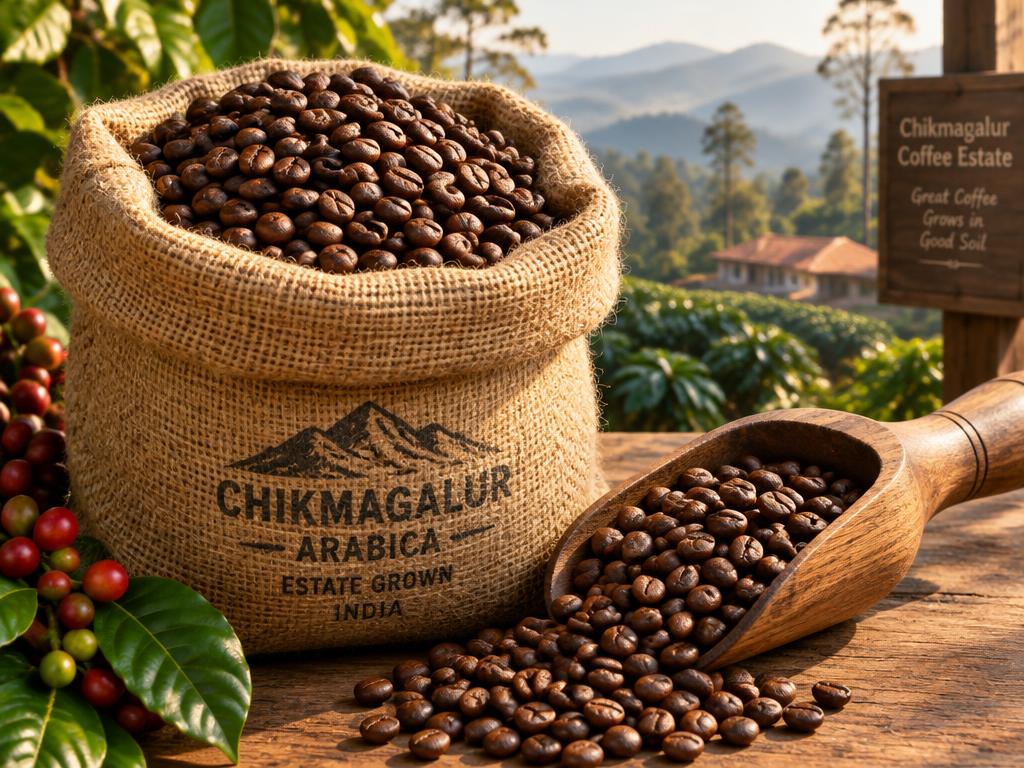
We pour Indian arabica from Chikmagalur, Coorg, Wayanad, the Nilgiris and the Araku Valley, roasted to order within 30 days of the event and ground per cup at the counter. Indian estate arabica is sweet and chocolatey, which is exactly what milk-based event drinks need.
Key takeaways: the numbers behind this post
If you only read one block on this page, read this one. Four figures answer most of what planners ask us in the first phone call about a live coffee bar; the rest of the post explains how each one moves.
- Origins poured
- 5 regions
- Karnataka, Kerala, Tamil Nadu, Andhra
- Roast window
- Within 30 days
- Roasted to order, never warehouse stock
- Grind
- Per order
- Ground at the counter, cup by cup
- Blend
- 100% arabica
- Robusta only on request, for a South Indian filter profile
In short: We pour Indian arabica from Chikmagalur, Coorg, Wayanad, the Nilgiris and the Araku Valley, roasted to order within 30 days of the event and ground per cup at the counter. Indian estate arabica is sweet and chocolatey, which is exactly what milk-based event drinks need.
The Indian origins we pour, and what each one tastes like
India grows arabica in the shade, at altitude, alongside pepper and cardamom — which is why Indian lots tend to come out sweet, chocolatey and low in acid rather than bright and tea-like. That profile is exactly what a counter serving mostly cappuccinos and lattes needs. These are the regions we buy from.
| Growing region | State | What it tastes like | What we pour it as |
|---|---|---|---|
| Chikmagalur | Karnataka | Chocolate, roasted nut, soft acidity | Our default espresso base for milk drinks |
| Coorg (Kodagu) | Karnataka | Heavy body, cocoa, very low acidity | Cold brew and South Indian filter blends |
| Baba Budangiri | Karnataka | High-altitude, clean, sweet finish | Flat whites and latte art, where clarity shows |
| Wayanad | Kerala | Earthy, spice-forward, long finish | Filter coffee and spiced seasonal lattes |
| Nilgiris | Tamil Nadu | Brighter, floral, more delicate | Americanos and black pour-over service |
| Araku Valley | Andhra Pradesh | Sweet, fruity, tribal co-operative grown | Single-origin signature drinks on request |
All lots are 100% arabica and roasted to order within 30 days of your event date; robusta is blended in only on request, for a traditional South Indian filter profile. Beans are ground per cup at the counter, and multi-day events get fresh beans each morning rather than carry-over stock. Couples often pick the region nearest their home state as a line on the menu card.
Indian origins
Indian estates in Karnataka, Kerala, Tamil Nadu and Andhra's Araku Valley produce sweet, chocolatey arabica that suits milk drinks perfectly.
Choose your origin, we'll roast to your date
Send your date, city, venue and guest count and you will have a menu plus a costed per-guest number within two hours. Or call +91 96731 98867 and we will price it on the call.
How to choose the beans for your event
This is the process in practice rather than in theory — each step is where a real event either stays on track or starts to wobble.
- 1
Start from what guests will actually drink
Step 1At most Indian events, four cups in five are cappuccinos, lattes or cold coffee. That means a sweet, chocolatey lot that holds up in milk beats a delicate, acidic one every time.
- 2
Pick a region, not a vague adjective
Step 2Chikmagalur and Coorg for body and chocolate, Baba Budangiri for clarity in flat whites, Nilgiris for black coffee service, Araku for a fruit-forward single-origin signature.
- 3
Ask for the roast date, not the roast level
Step 3Roasted to order inside 30 days of the event is the number that matters. A medium roast from last season tastes flatter than a slightly darker lot roasted last week.
- 4
Decide whether robusta belongs in the blend
Step 4For espresso in milk, 100% arabica is our default. For a traditional South Indian filter profile — and the crema a filter crowd expects — a small robusta share is the right call.
- 5
Put the origin on the menu card
1 week beforeIt costs nothing and it is the detail guests ask the barista about. Couples often pick the estate nearest their home state, which turns a drinks list into part of the story.
Frequently asked questions
What coffee beans do you use at events?
Can we choose the origin for our event?
How fresh are the beans on the day?
Do you offer decaf?
Is Indian coffee as good as imported coffee for events?
How is the coffee ground at the counter?
Can you serve South Indian filter coffee as well as espresso?
How we source and roast
These are operator numbers, not market research. 5,000+ events and 2.5M+ cups since 2016, across 60+ cities, is the dataset behind this post — which also means the figures carry our own assumptions, listed plainly below.
- ●Origins listed are estates and regions we have actually bought from and poured
- ●Roast windows set by our roasting partners' schedules against event dates
- ●Tasting notes written from cupping the lots we serve, in milk as well as black
- ●No origin claim we cannot trace to a named estate or co-operative
What a quoted rate includes
- Commercial espresso machine & grinder
- 2–6 certified baristas
- Premium Indian arabica beans
- Cups, stirrers, sugar & milk options
- Branded counter on request
What it excludes
- 18% GST, invoiced separately on every booking
- Travel, transport and stay for venues outside city limits, charged at cost
- Venue-supplied floor space, power points and water access
- Overtime beyond the booked service window, billed hourly
- Menu items outside the agreed list, and print production beyond the standard counter wrap
Who this post is for
- Hosts who care what is actually in the cup, not only what the counter looks like
- Couples and corporate teams who want an origin story on the menu card
- Anyone comparing vendors who cannot name their beans or their roaster
Published 5 March 2026 · last reviewed 22 September 2026 by the Barista Station events team · +91 96731 98867